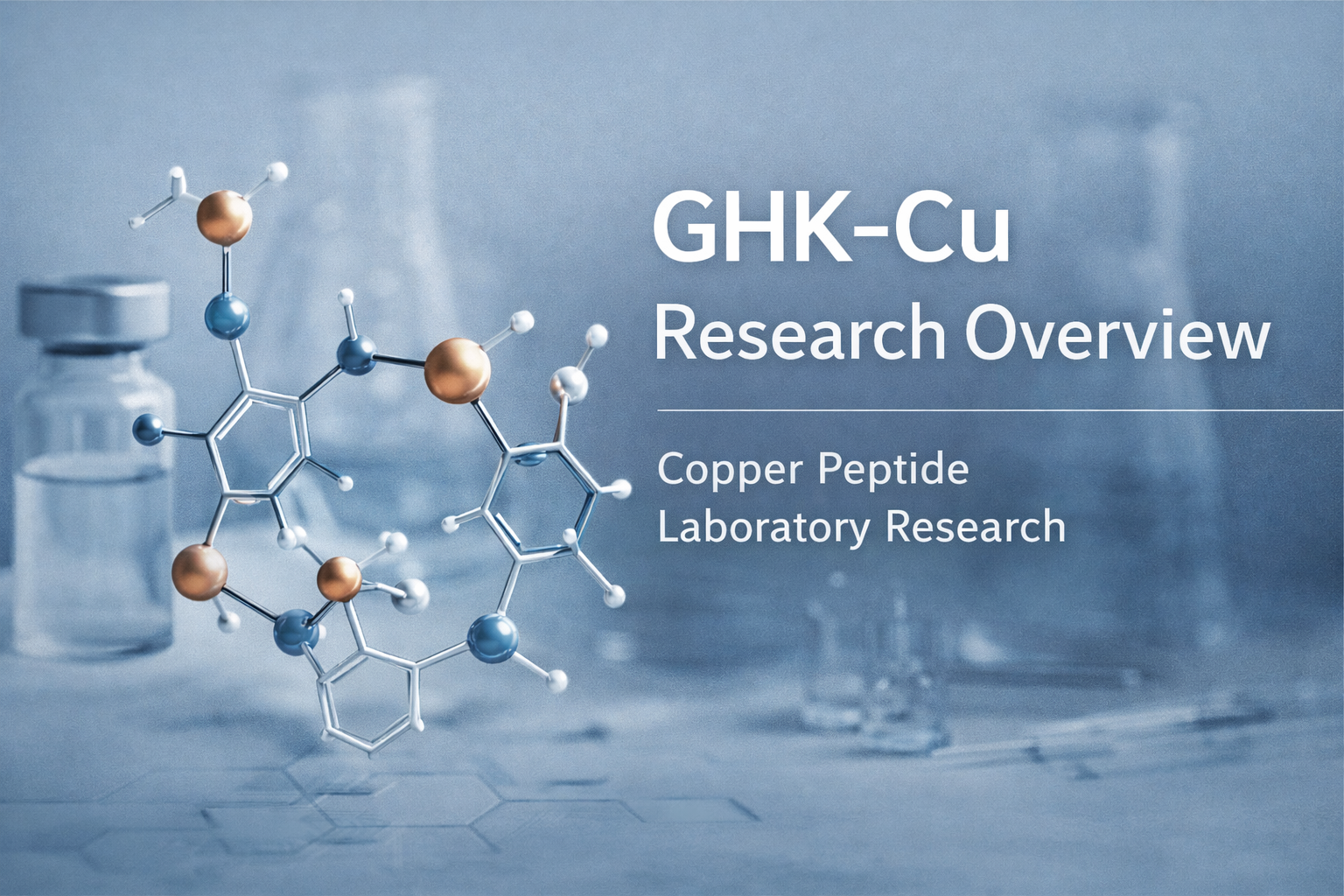
GHK-Cu (Copper Peptide) – Research Overview
Last updated: February 2026
Important notice: This page is provided for educational and informational purposes only. All materials referenced are intended for laboratory research use only. Not for human or veterinary use.
What is GHK-Cu?
GHK-Cu research focuses on the study of a naturally occurring copper-binding peptide examined in laboratory and academic settings. Researchers have explored GHK-Cu in relation to peptide signaling, copper transport, and cellular communication models under controlled research conditions.
Since its identification, GHK-Cu has been of interest to researchers studying peptide signaling, trace mineral transport, and cellular communication pathways in controlled laboratory environments.
Why Researchers Study Copper Peptides
Copper is an essential trace element involved in numerous biological processes at the cellular level. Peptides capable of binding copper ions have become an area of research due to their potential role in:
- Cellular signaling mechanisms
- Peptide–metal interactions
- Structural and biochemical modeling
- Tissue and extracellular matrix research models
GHK-Cu is one of the most widely referenced copper peptides in scientific literature, making it a frequent subject of in vitro and ex vivo research.
Areas of Ongoing Research Interest
Published studies and laboratory investigations have explored GHK-Cu in relation to:
- Peptide signaling pathways in cell cultures
- Copper transport and regulation models
- Gene expression markers in laboratory settings
- Extracellular matrix structure research
- Cellular response mechanisms under controlled conditions
It is important to note that these research areas are experimental and are conducted exclusively in laboratory environments.
Laboratory Research Context
GHK-Cu is commonly used in:
- Biochemical research labs
- Peptide stability testing
- Molecular interaction studies
- Controlled experimental models
Researchers value GHK-Cu for its well-documented structure, reproducibility, and presence in peer-reviewed literature, which allows for consistent experimental reference.
Product Quality and Research Standards
When evaluating copper peptides for laboratory research, scientists often consider:
- Purity verification (e.g., analytical testing methods)
- Batch consistency
- Storage stability
- Documentation and traceability
Maintaining strict laboratory standards is essential for reproducible and reliable research outcomes.
Regulatory and Compliance Notice
GHK-Cu and related peptide materials referenced on this site are:
- Intended solely for laboratory research purposes
- Not approved for human consumption
- Not intended to diagnose, treat, cure, or prevent any disease
Any mention of scientific studies or research areas is provided strictly for educational context.
Educational Use Only
This content is designed to support:
- Academic discussion
- Scientific literacy
- Research-oriented education
No medical, cosmetic, or therapeutic claims are made or implied.
Learn More
For those interested in peptide research topics, you may also explore related educational resources covering:
- Peptide classification and structure
- Research methodologies involving peptides
- Laboratory handling considerations
All content across this site follows a research-first, compliance-focused approach.
Disclaimer:
Materials and compounds referenced are for laboratory research use only. Not for human or veterinary use. By accessing this page, you acknowledge that all information is provided strictly for educational purposes.
Peptide research continues to expand as scientists explore new ways to understand cellular communication, tissue recovery, metabolic efficiency, and growth-related signaling pathways. As interest in performance-related peptides grows, education-driven, compliance-focused research remains essential.
At NuRev Peptides, our mission is to support researchers with:
-
High-purity, independently tested research peptides
-
Transparent documentation
-
Educational content designed to promote informed scientific exploration
 Explore high-purity research peptides available in the U.S.
Additional scientific context related to compounds can be found through publicly available research databases such as PubChem.
For further information on purity please visit Certificates of Analysis.
To learn more about our research disclaimers please visit our page Research-only disclaimer.