When working with peptides or research compounds, one of the most common questions is:
What’s the difference between bacteriostatic water and reconstitution solution?
At first, they seem like completely different products. But the truth is:
👉 The difference often comes down to one key ingredient — benzyl alcohol.
Understanding this can help you choose the right solution, improve stability, and avoid contamination issues.
What Is Bacteriostatic Water?
Bacteriostatic water is:
👉 Sterile water that contains 0.9% benzyl alcohol
This small addition makes a big difference.
Key Benefits of Bacteriostatic Water:
- Helps prevent bacterial growth
- Allows for multiple uses from the same vial
- Extends shelf life after opening
- Commonly used in peptide reconstitution for research
Because of the benzyl alcohol, bacteriostatic water is considered a multi-use solution.
What Is a Reconstitution Solution?
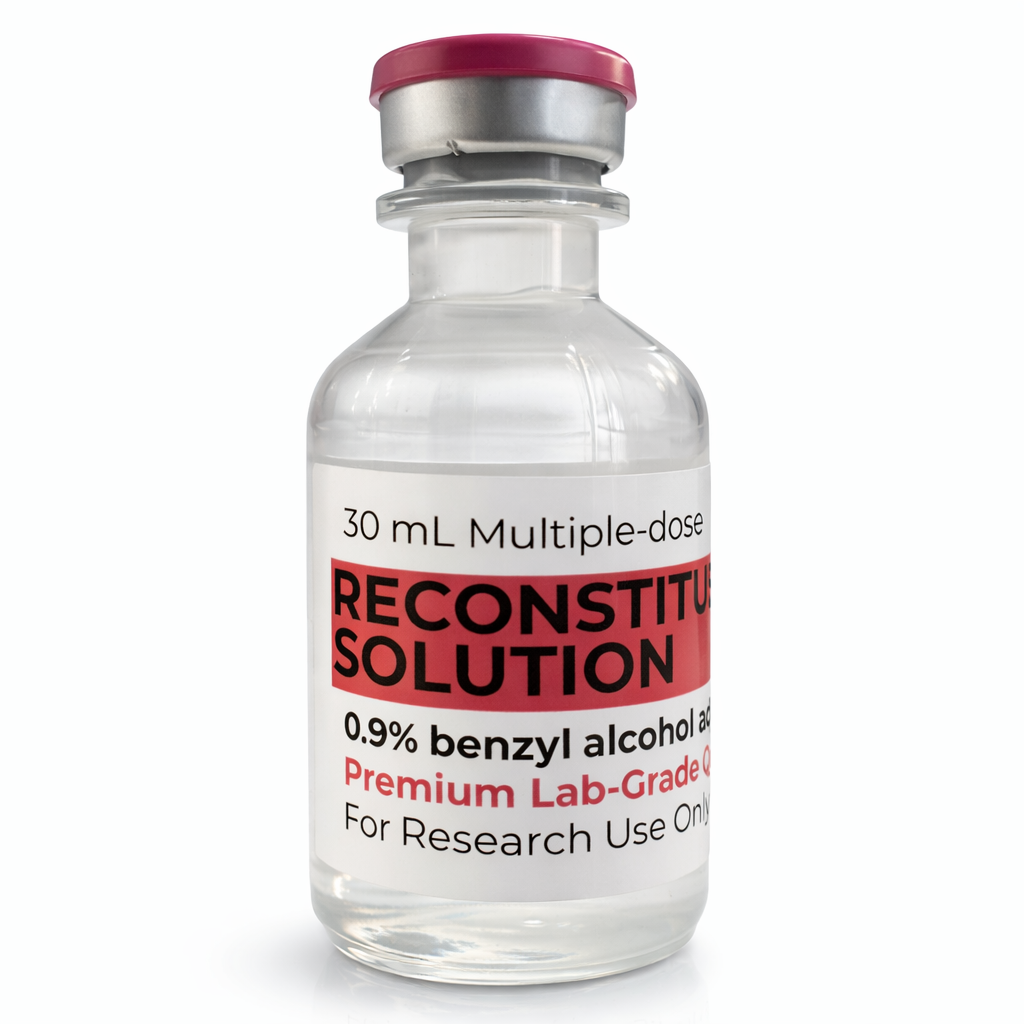
A reconstitution solution is a general term used to describe any liquid used to dissolve or mix a substance.
This can include:
- Sterile water (no benzyl alcohol)
- Bacteriostatic water (with benzyl alcohol)
- Buffered solutions (lab-specific applications)
👉 Important:
“Reconstitution solution” does NOT refer to a single formula.
Benzyl Alcohol: The Critical Difference
The real distinction between these solutions comes down to:
Does it contain benzyl alcohol?
If It Contains 0.9% Benzyl Alcohol:
- Acts as a bacteriostatic agent
- Slows or prevents bacterial growth
- Supports multi-dose use
- Improves handling over time
If It Does NOT Contain Benzyl Alcohol:
- No antimicrobial protection
- Should be treated as single-use only
- Higher risk of contamination after opening
Are Bacteriostatic Water and Reconstitution Solution the Same?
✔️ YES — If the reconstitution solution contains 0.9% benzyl alcohol
In this case, it is functionally identical to bacteriostatic water.
❌ NO — If it does not contain benzyl alcohol
Then it behaves like sterile water, which is:
- Shorter-lasting
- More sensitive to contamination
- Not ideal for repeated use
Why the Naming Difference Exists
You’ll often see both terms used, even when the formulas are similar.
This usually comes down to:
- Labeling differences
- Intended use (research vs clinical)
- Regulatory positioning
For example:
- “Bacteriostatic Water” is commonly associated with medical labeling
- “Reconstitution Solution” is often used in research or laboratory contexts
👉 Same concept, different positioning.
Bacteriostatic Water vs Sterile Water (Important Comparison)
This is another common confusion point.
Bacteriostatic Water:
- Contains 0.9% benzyl alcohol
- Multi-use
- More resistant to contamination
Sterile Water:
- No preservatives
- Single-use only
- Must be used immediately after opening
Best Practices for Research Use
When selecting a solution for reconstitution:
Choose Bacteriostatic Water (0.9% Benzyl Alcohol) If:
- You need multiple draws from the same vial
- You want added protection against contamination
- You are working with longer-term handling
Choose Sterile Water If:
- You plan to use the solution immediately
- Single-use is sufficient
- No preservative is preferred for your application
Common Mistakes to Avoid
- ❌ Assuming all reconstitution solutions are the same
- ❌ Ignoring benzyl alcohol content
- ❌ Reusing non-bacteriostatic solutions
- ❌ Not checking labeling or formulation
👉 Always verify what’s actually inside the vial.
Key Takeaways
- Bacteriostatic water = sterile water + 0.9% benzyl alcohol
- Reconstitution solution = general term (varies by formula)
- Benzyl alcohol determines:
- Stability
- Multi-use capability
- Resistance to contamination
👉 If it contains 0.9% benzyl alcohol, it functions like bacteriostatic water.
Final Thoughts
When it comes to reconstitution, the name doesn’t matter as much as the ingredients.
👉 Benzyl alcohol is the deciding factor.
Understanding this helps ensure:
- Better handling practices
- More consistent results
- Reduced contamination risk
FAQ
What is bacteriostatic water used for?
Bacteriostatic water is used in laboratory and research settings to reconstitute compounds while helping prevent bacterial growth.
Can reconstitution solution contain benzyl alcohol?
Yes. Some reconstitution solutions contain 0.9% benzyl alcohol, making them functionally the same as bacteriostatic water.
Is sterile water the same as bacteriostatic water?
No. Sterile water does not contain benzyl alcohol and is typically for single-use only.
Why is benzyl alcohol added?
Benzyl alcohol is added as a preservative to help inhibit bacterial growth and allow multi-use handling.