Ghk-cu Research Overview
GHK-Cu (Copper Peptide) – Research Overview Last updated: February 2026 Important notice: This page is provided for educational and informational purposes only. All materials referenced

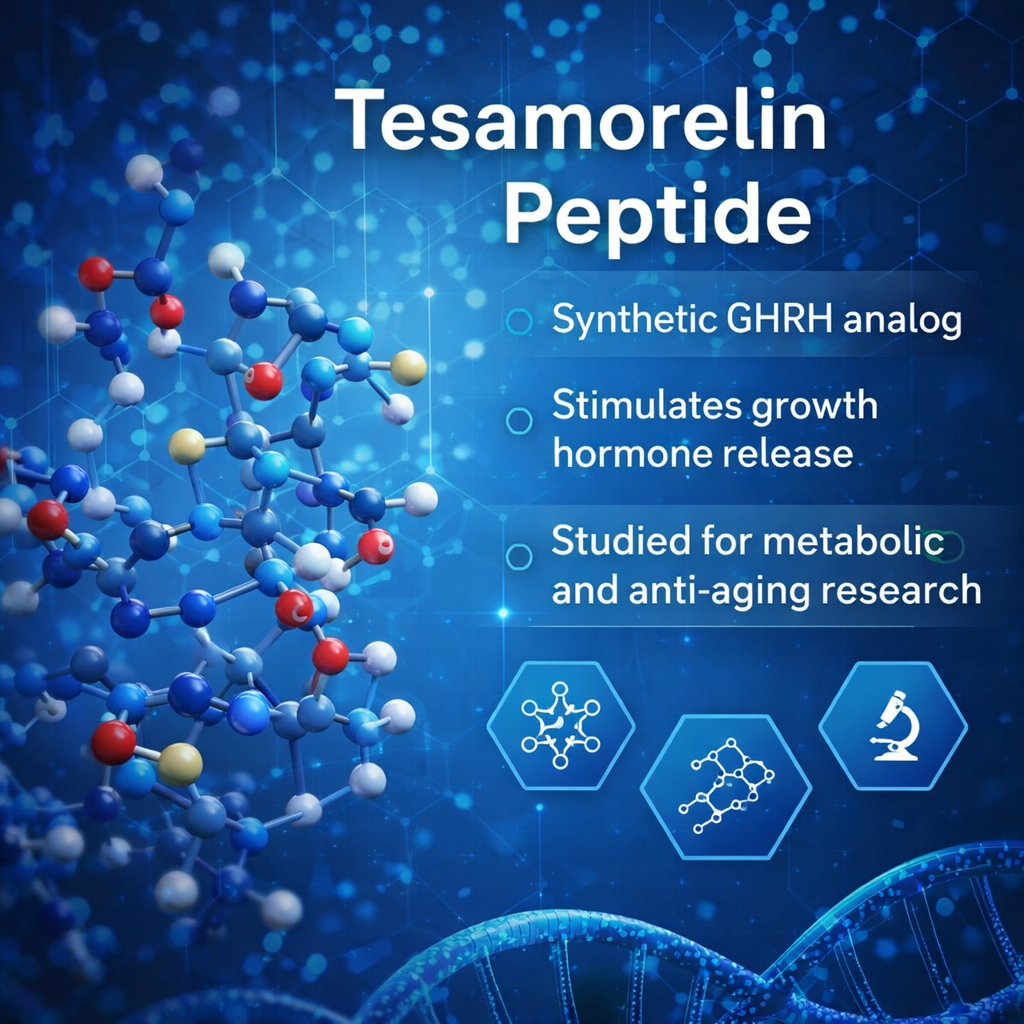
The Tesamorelin peptide is a synthetic growth hormone–releasing hormone (GHRH) analog that has been widely studied in laboratory and clinical research settings for its role in stimulating endogenous growth hormone secretion. Tesamorelin (pronounced “moe rel”) is a synthetic growth hormone-releasing hormone (GHRH) analogue that has been helping patients manage a challenging metabolic condition for over a decade. Approved by the FDA in 2010 specifically for reducing excess abdominal fat in HIV-infected patients with antiviral therapy-related lipodystrophy, tesamorelin was produced and developed by Theratechnologies, Inc. of Canada. Understanding how this treatment works, its benefits, and its safety considerations can help patients make informed decisions alongside their healthcare team.
Tesamorelin is marketed under trade names such as Egrifta SV and Egrifta Depot. The medication is administered as a once-daily subcutaneous tesamorelin injection into the stomach area. Its primary clinical effect is the reduction of visceral adipose tissue (VAT) in the belly region—the deep fat that accumulates around internal organs.
It is important to understand that tesamorelin does not cure HIV or replace antiretroviral therapy. The medicine works specifically to address one complication of long-term HIV treatment: abnormal fat accumulation in the abdomen. This article provides educational information only and does not replace medical advice; patients should always talk to their HIV or endocrine specialist before making treatment decisions.
Tesamorelin is a synthetic peptide drug structurally related to the hormone your body naturally produces to stimulate growth hormone release. The medication contains all 44 amino acids found in native human GHRH, with an additional trans-3-hexenoic acid group attached at the N-terminus that makes tesamorelin more stable than the natural human GHRH peptide, enhancing its resistance to enzymatic cleavage and increasing its potency.
Pharmacologically, tesamorelin is classified as a hormonal agent and specifically as a GHRH analogue. Tesamorelin stimulates the synthesis of endogenous growth hormone (GH) and insulin-like growth factor-1 (IGF-1), promoting the production of these compounds within the body as part of its mechanism of action. The prescription is indicated only for HIV-infected adults with excess visceral abdominal fat due to lipodystrophy—it is not approved for cosmetic weight loss or general obesity in the broader population.
Some compounding pharmacies and anti-aging clinics offer tesamorelin for off-label purposes such as bodybuilding or general fat reduction. These uses are not FDA-approved and may carry additional safety, efficacy, and legal concerns that patients should discuss with their doctor.
Understanding how tesamorelin works helps explain both its benefits and why careful monitoring is necessary during treatment.
When injected, tesamorelin binds to GHRH receptors located on specialized cells in the pituitary gland called somatotrophs. This binding activates a signaling cascade that stimulates the natural, pulsatile release of endogenous growth hormone into the bloodstream—mimicking the body’s normal hormone release patterns rather than providing external recombinant human growth hormone directly.
Key aspects of tesamorelin’s mechanism include:
This mechanism preserves the body’s natural hypothalamic-pituitary axis feedback, which distinguishes tesamorelin from direct growth hormone replacement therapies.
Tesamorelin received FDA approval in 2010 specifically to reduce excess visceral abdominal fat in HIV-infected adults with lipodystrophy. The medication is not approved for use in children or for general obesity treatment.
Clinical trial data demonstrates meaningful benefits for appropriate patients:
| Outcome Measure | Trial Results |
|---|---|
| Visceral fat reduction (26 weeks) | ~15-18% decrease vs. placebo |
| Visceral fat reduction (52 weeks) | ~9-18% sustained decrease |
| Waist circumference | Measurable reduction |
| Triglyceride levels | 10-15% improvement in some patients |
| Skeletal muscle area | 3-5% increase observed |
The benefits of tesamorelin are specific to visceral fat in the belly area. Subcutaneous fat and overall body weight may change less dramatically. Some research has shown improvements in surrogate metabolic markers, including triglycerides and markers of nonalcoholic fatty liver disease, though glucose monitoring remains essential.
One important consideration: discontinuation of treatment often leads to partial or full return of visceral fat over several months. Benefits are maintained only with continued therapy.

Tesamorelin is given as a once-daily subcutaneous injection, typically at a dose of 2 mg, administered into the abdominal fat. Many patients find that bedtime administration works well, as it may better mimic natural nocturnal growth hormone pulses.
Proper injection technique helps minimize discomfort and skin complications:
The product is supplied as a lyophilized powder that must be reconstituted with the provided diluent solution. Before injection, patients should verify that the solution is:
Only new, sterile needles and syringes should be used for each dose. Used needles must be discarded immediately into an FDA-cleared sharps container or a puncture-resistant container—never recap needles or place them in household trash.
If a dose is missed, patients should follow this guidance:
Tesamorelin has a generally tolerable safety profile based on clinical trials, but patients should be aware of potential local and systemic adverse effects that may require monitoring or medical attention.
Local reactions at the injection site are among the most frequently reported side effects, occurring in 30-40% of users:
Persistent or worsening injection site reactions should be reported to a doctor promptly.
Effects related to fluid retention and hormone changes may include:
Tesamorelin can increase IGF-1 levels as part of its mechanism of action. Excessive elevations may necessitate dose adjustment or discontinuation under medical supervision. Regular monitoring helps identify patients who may need therapy modifications.
Although rare, serious allergy symptoms require immediate emergency care:
Clinical studies and post-marketing surveillance have not demonstrated clinically significant hepatotoxicity or ALT elevation patterns attributable to tesamorelin.
Tesamorelin can affect glucose tolerance and insulin sensitivity, which is particularly relevant for patients with HIV who often already have metabolic risk factors from their condition and antiretroviral medications.
Some patients may experience glucose intolerance during tesamorelin therapy:
Healthcare providers typically recommend:
Patients with established diabetes may require adjustments in antidiabetic medications and closer follow-up while receiving tesamorelin.
Contact your doctor promptly if you experience:
Tesamorelin is not suitable for everyone. Understanding who should not use this medication helps prevent harm.
| Contraindication | Reason |
|---|---|
| Pregnancy | May harm developing fetus; effective contraception required; stop treatment if pregnant |
| Pituitary gland tumor (active, recurrent, or suspected) | Can stimulate tumor growth |
| Disrupted hypothalamic-pituitary axis | After brain surgery, irradiation, or head trauma affecting this region |
| Known hypersensitivity | Allergy to tesamorelin or its excipients |
Additional situations requiring careful evaluation include:
Patients in these categories require close specialist oversight if tesamorelin therapy is considered. Oncologic evaluation should be completed before starting treatment in patients with a cancer history.
Safe use of tesamorelin requires regular follow-up visits and laboratory tests. Consistent monitoring helps maximize benefits while identifying potential problems early.
| Test/Assessment | Frequency |
|---|---|
| IGF-1 levels | Every 6-12 months |
| Fasting blood glucose | Quarterly |
| Hemoglobin A1c | Quarterly |
| Lipid panel | Routinely, as directed |
| Liver enzymes | Baseline and periodic |
| Renal function | As clinically indicated |
Periodic physical examinations should assess:
In specialty settings, imaging such as CT scan or MRI of the abdomen may quantify changes in visceral adipose tissue to assess treatment response and efficacy.
Patients should maintain scheduled appointments and bring up new symptoms, medication changes, or pregnancy plans with their healthcare team.

Proper storage conditions preserve drug potency and safety throughout the treatment period.
Unopened vials of tesamorelin powder should be:
Always check the product’s official labeling for exact storage instructions specific to your formulation.
Once the medication is mixed with diluent:
Used needles and syringes require careful disposal:
Hepatic safety has been closely evaluated for tesamorelin because many patients living with HIV have coexisting liver conditions, including nonalcoholic fatty liver disease (NAFLD), hepatitis B, or hepatitis C infection.
Research from clinical trials in HIV-associated lipodystrophy has not shown a signal for tesamorelin-induced hepatotoxicity:
Studies by researchers including Falutz J, Zoltowska M, and Assaad H have contributed to understanding tesamorelin’s metabolic effects and safety profile in this population.
Some patients experience improvements in imaging markers of nonalcoholic fatty liver disease during treatment. These improvements likely reflect the reduction in visceral fat and improved metabolic status rather than direct hepatic action of tesamorelin.
Tesamorelin is considered unlikely to cause clinically apparent liver injury. However, baseline and periodic liver function tests remain prudent in patients with known hepatic comorbidities.
Tesamorelin is a prescription-only medication regulated as a biologic peptide drug. It cannot be obtained over the counter and requires proper medical supervision.
| Trade Name | Notes |
|---|---|
| Egrifta SV | Single-vial formulation |
| Egrifta Depot | May differ in dosing schedule |
Formulations may differ in excipients and specific administration requirements. Prescribers must consult current product labeling for detailed information.
Full, updated prescribing information and patient medication guides are available through:
Only licensed healthcare professionals can determine if tesamorelin is appropriate therapy, taking into account the patient’s HIV regimen, comorbidities, and concurrent medications or foods that may interact with treatment.
Tesamorelin is a GHRH analogue specifically designed to reduce visceral abdominal fat in adults living with HIV who have developed lipodystrophy. The medication requires once-daily subcutaneous self-injection and ongoing medical supervision to optimize outcomes.
Benefits:
Risks:
Patients considering tesamorelin or currently on treatment should maintain open communication with their HIV or endocrine specialist. Report any new symptoms, changes in energy levels, signs of bleeding or swelling, or concerns about the medication promptly.
If you have questions about whether tesamorelin is right for your situation, schedule a consultation with your healthcare team to discuss your individual risk factors, treatment goals, and monitoring plan. This medication can be an effective tool for managing HIV-associated lipodystrophy when used appropriately under proper medical supervision.
Additional scientific context related to compounds can be found through publicly available research databases such as PubChem.
For further information on purity please visit Certificates of Analysis.
To learn more about our research disclaimers please visit our page Research-only disclaimer.
GHK-Cu (Copper Peptide) – Research Overview Last updated: February 2026 Important notice: This page is provided for educational and informational purposes only. All materials referenced

Peptides for recovery have become a major focus in modern performance and fitness research as scientists study how short chains of amino acids influence tissue
Retatrutide Titration Schedule & Dosage Protocol Retatrutide Titration Schedule & Dosage Protocol for Weight Loss A Research-Based Guide to Gradual Dosing Strategies Introduction The retatrutide
SLU-PP-332 peptide is an experimental research compound currently being studied for its effects on metabolism, energy expenditure, and fat oxidation in non-clinical laboratory models. Interest