Ghk-cu Research Overview
GHK-Cu (Copper Peptide) – Research Overview Last updated: February 2026 Important notice: This page is provided for educational and informational purposes only. All materials referenced

Peptides for recovery have become a major focus in modern performance and fitness research as scientists study how short chains of amino acids influence tissue repair, muscle signaling, and metabolic recovery pathways. In laboratory and preclinical models, peptides are explored for their role in supporting recovery, growth signaling, and overall performance-related biological processes.
Peptides have emerged as powerful tools for athletes, bodybuilders, and anyone focused on optimizing their physical performance and recovery. These compounds consist of short amino acid chains that trigger specific responses in your body, ranging from enhanced growth hormone production to faster tissue repair. Unlike conventional supplements, peptides deliver precise, rapid results that target your exact recovery or growth needs.
Understanding which peptides work best for your goals requires careful consideration of their mechanisms and applications. This guide examines ten high-performing peptides that stand out for their effectiveness in recovery, muscle development, and athletic performance. You’ll discover how each peptide functions, when you should consider using it, and what distinguishes it from alternatives. Keep in mind that most peptides remain classified as research compounds without FDA approval for human use, and competitive athletes must verify their legality under anti-doping regulations before use.
Peptides are short sequences of amino acids, generally containing between 2 and 50 units, that act as signaling molecules throughout your body. Unlike full proteins, they remain compact yet highly targeted in how they function, directing cells to initiate processes like tissue regeneration, hormone secretion, or immune activation.
When used for medical or athletic purposes, synthetic peptides are created to replicate naturally occurring biological signals. This allows you to achieve specific goals such as:
In research settings, peptides for recovery are often evaluated for their influence on cellular repair, inflammation signaling, and post-exertion recovery models. You’ll typically receive peptides through subcutaneous or intramuscular injections, though certain compounds can be taken orally. Each peptide operates through distinct pathways with different half-lives and tissue targets. Many athletes combine multiple peptides to amplify results through complementary mechanisms.
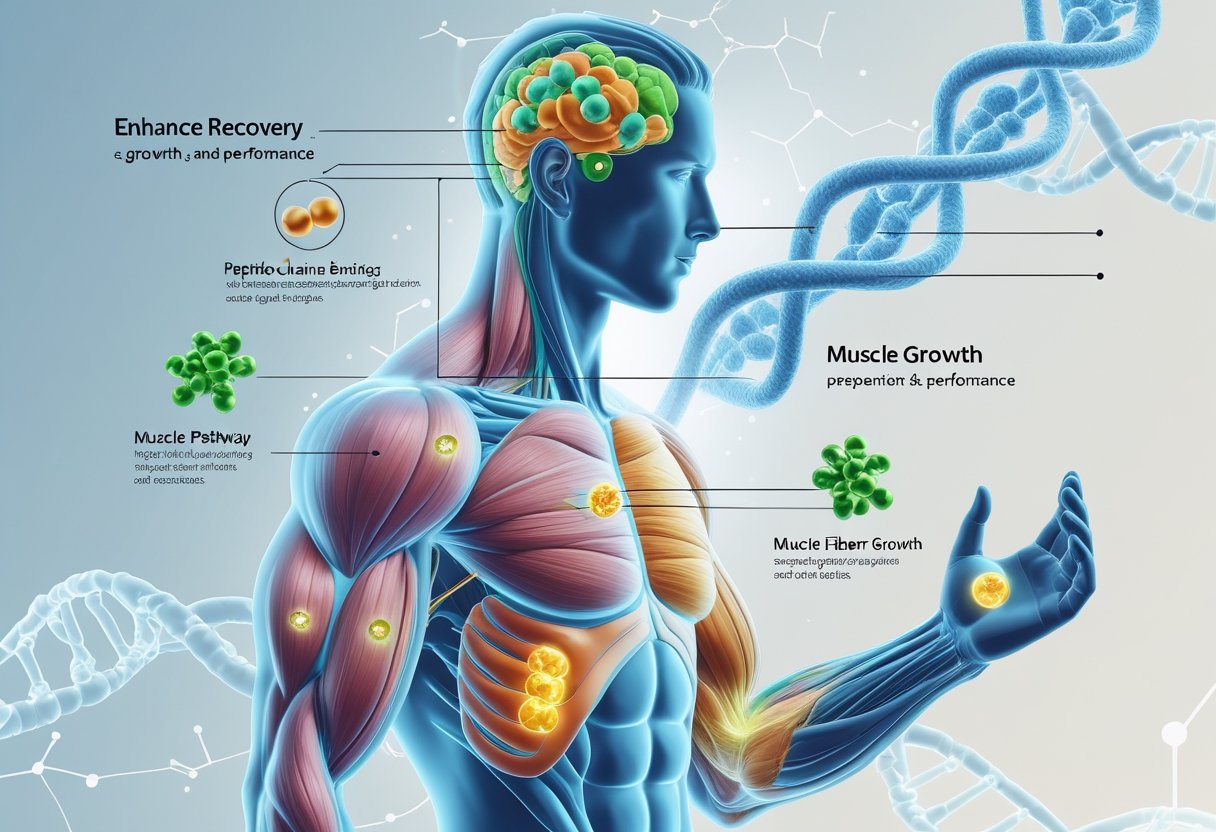
Peptides operate by attaching to designated receptors located on cell surfaces, which then triggers specific biological pathways. These biological messengers coordinate various functions throughout your system.
When you introduce particular peptides, they can influence distinct processes:
Each peptide carries out its own specialized function. BPC-157 promotes blood vessel formation and directs healing cells to injured tendons and ligaments. CJC-1295 connects with your pituitary gland to encourage natural growth hormone release. IGF-1 LR3 directly activates muscle receptors to enhance protein creation and fiber development.
This precision allows you to address targeted concerns without creating widespread systemic disruptions. By working with your body’s existing signaling mechanisms, peptides help you achieve faster recovery, enhanced training capacity, and improved wellness outcomes.
This peptide originates from a protective protein in stomach lining and has become essential for athletes addressing connective tissue damage. It supports repair across tendons, ligaments, muscles, and digestive tract tissues.
BPC-157 promotes healing through multiple biological pathways. It accelerates collagen synthesis while encouraging fibroblast cells to migrate toward damaged areas. The peptide also stimulates new blood vessel formation, delivering oxygen and nutrients to injured tissue.
You’ll benefit from its ability to reduce inflammation in targeted areas. It maintains structural integrity in gastrointestinal tissues while supporting nerve tissue regeneration.
Injury Types:
Additional Benefits:
The compound acts quickly at injection sites. Most users observe improvements within one to two weeks of starting treatment, making it practical for addressing acute injuries requiring rapid intervention.
TB-500 functions as a synthetic form of thymosin beta-4, a naturally occurring compound that supports tissue repair throughout the entire body. Unlike peptides that concentrate on specific injury sites, TB-500 works systemically to facilitate healing across multiple areas simultaneously.
This peptide delivers therapeutic effects through several pathways:
These combined actions make TB-500 effective for accelerating recovery across muscle, fascia, tendons, and connective tissue.
You can apply TB-500 for:
Administration occurs through subcutaneous or intramuscular injection, allowing the compound to circulate and reach damaged tissues throughout your body.
MK-677, referred to as Ibutamoren, stands out as an orally-active growth hormone secretagogue that elevates GH and IGF-1 without requiring injections. It functions by mimicking ghrelin action, binding to ghrelin receptors to trigger natural growth hormone secretion.
When you take MK-677, it stimulates several key processes:
The compound maintains hormone balance while providing anabolic support through growth hormone pathways.
You might consider MK-677 for:
Typical protocols run 8-16 weeks, making it practical for those seeking anabolic benefits through non-traditional pathways.
CJC-1295 functions as a modified growth hormone-releasing hormone analog that signals your pituitary to produce more natural GH. The DAC formulation offers extended activity, maintaining elevated hormone levels for several days following administration.
This peptide delivers multiple physiological benefits:
The Drug Affinity Complex technology extends its half-life from minutes to days by binding reversibly to serum albumin. This modification allows for convenient weekly or bi-weekly dosing while maintaining pulsatile hormone release patterns.
You can utilize CJC-1295 for:
Administration frequency typically ranges from one to two weekly injections, offering practical advantages over daily peptide regimens.
Ipamorelin acts as a selective growth hormone secretagogue that targets specific ghrelin receptors in your pituitary gland. This activation prompts natural GH pulses without elevating stress hormones like cortisol or prolactin.
The peptide works by mimicking ghrelin’s receptor binding pattern, which triggers clean GH release in controlled bursts. Your body responds with:
Unlike older growth hormone peptides, Ipamorelin maintains minimal effect on cortisol and prolactin. This precision allows you to access GH benefits while avoiding hormonal spillover that compromises results.
You can incorporate this peptide through several protocols:
Typical dosing occurs once or twice daily, with observable benefits in sleep quality, lean mass preservation, and reduced inflammation emerging over multiple weeks.
Human Growth Hormone stands as the most recognized compound in performance and recovery circles. As the direct form of the hormone your body produces naturally, it influences tissue repair, muscle development, fat breakdown, and cellular regeneration.
HGH activates multiple pathways in your body that support recovery and growth. It promotes IGF-1 production, which drives muscle hypertrophy and tissue repair throughout your system.
The compound enhances protein synthesis and nitrogen retention in muscle tissue. You’ll experience faster recovery from training stress and physical injuries when HGH levels are optimized.
Additional benefits include improved sleep quality, healthier skin appearance, and better joint function. HGH also supports fat loss through lipolysis and enhanced glucose metabolism.
Athletic Recovery
Longevity and Body Composition
Advanced Protocols
You’ll typically administer HGH daily through subcutaneous injection. Results accumulate over several months of consistent use, with effects becoming more pronounced over time.
Sermorelin is a peptide that replicates the function of growth hormone-releasing hormone to promote your body’s own GH production. Rather than introducing synthetic growth hormone, it works with your pituitary gland to maintain natural hormone rhythms. This makes it a common choice in hormone therapy and anti-aging programs.
Sermorelin activates the pituitary gland to release growth hormone according to your body’s natural cycles. This approach provides several advantages:
By stimulating endogenous hormone release, you avoid the suppression risks associated with direct growth hormone administration.
You can use Sermorelin for various wellness and performance goals:
This peptide suits those seeking gradual, consistent improvements without legal or medical complications.
Pegylated Mechano Growth Factor is an IGF-1 derivative engineered to respond when your muscle tissue experiences mechanical stress or damage. The compound specializes in activating muscle satellite cells, which serve as dormant stem cells that become active during the repair process.
The peptide promotes several physiological responses in your body. It enhances muscle cell differentiation while accelerating tissue reconstruction. PEG-MGF activates satellite cells following training sessions, making them available for fiber regeneration.
When you inject it intramuscularly into specific muscle groups, you can target localized growth in those areas. The pegylation modification extends the compound’s duration in your bloodstream compared to standard MGF, which naturally degrades within minutes.
You may also notice reduced delayed onset muscle soreness after intense training sessions. This occurs because the peptide accelerates the repair cascade that begins immediately after you stress muscle fibers.
You can incorporate this peptide during muscle-building phases or body recomposition protocols. Athletes and bodybuilders use PEG-MGF to accelerate recovery between demanding training cycles.
The compound proves valuable during injury rehabilitation when muscle atrophy becomes a concern. You can administer injections directly into the muscles you trained that day for site-specific effects.
Many users apply it post-workout as a standalone treatment or combine it with other anabolic peptides in structured protocols.
IGF-1 LR3 is a synthetic analog of naturally occurring insulin-like growth factor-1 that binds to receptors in your muscle tissue. The LR3 modification extends the peptide’s activity window compared to native IGF-1.
This peptide activates multiple pathways in your body. It promotes the proliferation of satellite cells, which are precursor cells that develop into new muscle fibers. Your muscles receive enhanced glucose uptake, directing nutrients where they’re needed most for growth and repair.
Native IGF-1 has a plasma half-life of approximately 10-12 hours, while the LR3 variant extends this duration to 20-30 hours. The structural changes reduce binding to IGF binding proteins, allowing greater tissue access.
You may experience improved body composition through both muscle development and changes in how your body processes nutrients. The peptide can help maintain muscle tissue during periods of reduced caloric intake.
Bodybuilders and athletes use IGF-1 LR3 for muscle growth and recovery enhancement. You might consider this peptide during:
The extended half-life allows for less frequent administration schedules. Proper dosage, legalities, and potential risks require careful consideration before use.
Thymosin Alpha-1 operates as a therapeutic peptide for immune modulation, supporting your body during periods of elevated stress or demanding training phases. This naturally occurring thymic peptide enhances your immune system’s capacity to respond effectively.
The peptide provides several key benefits:
While Thymosin Alpha-1 doesn’t directly increase muscle mass, it helps maintain training consistency by supporting immune resilience when you need it most.
You may benefit from Thymosin Alpha-1 in these situations:
| Scenario | Application |
|---|---|
| Post-illness recovery | Athletes returning to training after sickness |
| Recovery support | Post-cycle or post-injury protocols |
| Autoimmune conditions | Modulating immune response and gut health |
| Wellness stacking | Combined with other recovery peptides |
The peptide works effectively when stacked with compounds like BPC-157, MK-677, or growth hormone for comprehensive recovery support during high-stress training periods.
The peptides commonly used for performance and recovery exist in a regulatory gray area. Most compounds fall outside FDA approval for human use and are marketed as research chemicals only.
You can obtain certain peptides like Sermorelin or HGH through licensed compounding pharmacies, but only with a valid prescription from a healthcare provider. The majority of performance-enhancing peptides including BPC-157, TB-500, MK-677, and IGF-1 LR3 remain unapproved for therapeutic purposes.
Importing these substances without proper documentation may violate customs regulations depending on your location.
If you participate in drug-tested athletics, you must avoid these compounds entirely. Major anti-doping agencies prohibit peptides that influence healing, growth hormone, or recovery:
Banned categories include:
| Category | Examples |
|---|---|
| Growth hormone secretagogues | MK-677, CJC-1295, Ipamorelin |
| Growth factors | IGF-1 LR3, PEG-MGF |
| Tissue repair peptides | BPC-157, TB-500, Thymosin Alpha-1 |
Understanding the legalities and ethics surrounding these substances is critical for competitive athletes. Even trace exposure can trigger failed tests and sanctions.
Unregulated peptides carry significant safety risks due to inconsistent manufacturing standards and questionable sourcing. You face potential exposure to contaminated or mislabeled products when purchasing from unverified suppliers.
Natural alternatives like collagen, omega-3 fatty acids, and DHEA provide recovery benefits without regulatory complications.
When selecting peptides, you need a defined target before beginning any protocol. Your choice should depend on whether you’re addressing injury healing, body composition changes, or athletic output.
Before starting, you must evaluate several key factors:
| Goal | Primary Consideration |
|---|---|
| Muscle development | Growth hormone pathway activation |
| Joint repair | Tissue regeneration properties |
| Fat reduction | Metabolic enhancement effects |
If you’re not prepared for advanced compounds, natural alternatives exist. Options like collagen peptides, glutamine supplementation, and joint support formulas provide legal pathways to recovery support without research-grade substances.
Your decision should prioritize safety, evidence-based protocols, and compatibility with your current health status.
BPC-157 stands out as one of the most researched options for accelerating muscle tissue repair. This peptide works by promoting angiogenesis, which increases blood flow to damaged areas and speeds up the healing process.
TB-500 represents another powerful choice for muscle regeneration. It contains a synthetic version of thymosin beta-4, which helps regulate cell building proteins like actin.
IGF-1 LR3 supports muscle fiber repair by stimulating satellite cell activation. These cells are responsible for repairing and rebuilding damaged muscle tissue after intense training or injury.
Key peptides for muscle regeneration:
CJC-1295 without DAC offers a favorable safety profile when used appropriately. This growth hormone releasing hormone analog stimulates natural production without causing significant side effects at proper dosages.
Ipamorelin has gained recognition for its selective action and minimal impact on cortisol or prolactin levels. Unlike other growth hormone secretagogues, it produces a gentler release pattern that mimics natural rhythms.
GHRP-6 provides another option with documented use in clinical settings. While it may increase appetite, it generally maintains a good safety record when administered under proper guidance.
| Peptide | Safety Characteristics | Primary Benefit |
|---|---|---|
| CJC-1295 | Low side effect profile | Sustained GH release |
| Ipamorelin | Selective, minimal hormonal disruption | Controlled GH elevation |
| GHRP-6 | Well-studied, predictable effects | Muscle protein synthesis |
| BPC-157 | Natural gastric peptide derivative | Tissue healing |
Combining CJC-1295 with Ipamorelin creates a synergistic effect for both muscle development and recovery. This stack amplifies growth hormone release while maintaining hormonal balance throughout the day.
Adding BPC-157 to a growth hormone stack enhances the recovery and muscle repair benefits you can achieve. The healing properties complement the anabolic effects of GH-releasing peptides.
TB-500 pairs effectively with BPC-157 for comprehensive tissue repair. This combination addresses both structural healing and inflammation reduction simultaneously.
Effective stacking protocols:
Growth hormone releasing peptides improve athletic output by increasing lean muscle mass and reducing recovery time between training sessions. Peptides support performance by optimizing your body’s natural processes rather than introducing foreign hormones.
Hexarelin demonstrates particular effectiveness for power and strength athletes. It stimulates robust GH pulses that support muscle contractility and neural adaptations.
GHRP-2 offers benefits for endurance athletes by improving cardiovascular efficiency and oxygen utilization. The peptide also supports connective tissue health, which helps prevent overuse injuries.
AOD-9604 contributes to performance by targeting fat metabolism without affecting insulin sensitivity. This allows you to maintain energy levels while optimizing body composition.
Epithalon has gained attention for its effects on telomere length and cellular aging. Research suggests it may help regulate circadian rhythms and support healthy aging processes.
GHK-Cu combines a copper peptide complex that addresses multiple aging markers. It supports collagen production, wound healing, and may reduce visible signs of aging in skin tissue.
Thymosin Alpha-1 focuses on immune system optimization, which naturally declines with age. Maintaining robust immune function becomes increasingly important as you get older.
Anti-aging peptide applications:
BPC-157 extends beyond muscle recovery to support gut health and intestinal repair. Your digestive system plays a central role in overall wellness, making this peptide valuable for comprehensive healing applications.
Thymosin Alpha-1 strengthens immune responses and helps your body fight infections more effectively. A well-functioning immune system forms the foundation of good health.
Selank provides cognitive and mood support through its effects on neurotransmitter systems. Mental wellness directly impacts physical health and recovery capacity.
PT-141 addresses sexual health and libido through melanocortin receptor activation. This aspect of wellness significantly affects quality of life and hormonal balance.
| Wellness Area | Recommended Peptide | Primary Mechanism |
|---|---|---|
| Digestive Health | BPC-157 | Gut lining repair |
| Immune Function | Thymosin Alpha-1 | T-cell regulation |
| Cognitive Performance | Selank | Anxiety reduction, focus |
| Metabolic Health | AOD-9604 | Fat metabolism |
| Sexual Wellness | PT-141 | Melanocortin activation |
In peptide research, stacking refers to studying multiple peptides together to observe how different biological pathways may interact. Researchers often explore peptide combinations to better understand synergistic effects related to recovery signaling, growth hormone pathways, metabolic function, and cellular performance.
Below are commonly studied peptide combinations in laboratory and preclinical research settings.
BPC-157 + TB-500
Frequently researched together for their roles in angiogenesis, tissue signaling, and cellular repair mechanisms.
👉 Learn more about BPC-157 research:
CJC-1295 + Ipamorelin
Studied for their interaction with growth hormone release patterns and GH-related signaling cascades.
👉 Explore GH-related peptide research:
AOD-9604 + MOTS-c
Investigated in metabolic models focused on fat oxidation, mitochondrial signaling, and energy regulation.
👉 Read more about MOTS-c peptide research:
IGF-1 LR3 + PEG-MGF
Commonly studied in muscle and tissue research models involving cellular growth signaling and regeneration pathways.
| Peptide | Primary Research Focus | Common Research Models |
|---|---|---|
| BPC-157 | Tissue repair & angiogenesis signaling | Cellular & animal studies |
| TB-500 | Actin regulation & recovery pathways | Preclinical models |
| CJC-1295 | Growth hormone signaling | Endocrine research |
| Ipamorelin | GH receptor interaction | Hormonal pathway studies |
| IGF-1 LR3 | Cellular growth signaling | Muscle & tissue research |
| PEG-MGF | Muscle repair signaling | Regenerative models |
| AOD-9604 | Lipolysis & fat metabolism | Metabolic research |
| MOTS-c | Mitochondrial function | Cellular energy studies |
| MK-677 | GH/IGF axis research | Endocrine models |
| Tesamorelin | Visceral fat signaling | Metabolic & endocrine studies |
👉 Learn more about Tesamorelin research applications:
Because peptides are biologically active research compounds, laboratories emphasize strict handling and storage protocols to preserve research accuracy and compound integrity.
Common research best practices include:
Proper temperature-controlled storage
Use of sterile laboratory supplies
Clear labeling and documentation
Avoidance of cross-contamination
Adherence to institutional and laboratory research guidelines
👉 View NuRev’s commitment to lab-tested peptide quality:
All peptides sold by NuRev Peptides are intended strictly for laboratory research purposes only and are not approved for human or veterinary use.
Peptides are widely studied for recovery, growth signaling, metabolic health, and performance-related pathways
Each peptide interacts with specific biological mechanisms, making compound selection research-dependent
Stacking peptides may help researchers explore synergistic biological responses
Purity, testing, and sourcing play a critical role in research reliability
👉 Browse the full Peptide Research Library:
Peptide research continues to expand as scientists explore new ways to understand cellular communication, tissue recovery, metabolic efficiency, and growth-related signaling pathways. As interest in performance-related peptides grows, education-driven, compliance-focused research remains essential.
At NuRev Peptides, our mission is to support researchers with:
High-purity, independently tested research peptides
Transparent documentation
Educational content designed to promote informed scientific exploration
👉 Explore high-purity research peptides available in the U.S.
GHK-Cu (Copper Peptide) – Research Overview Last updated: February 2026 Important notice: This page is provided for educational and informational purposes only. All materials referenced
Tesamorelin The Tesamorelin peptide is a synthetic growth hormone–releasing hormone (GHRH) analog that has been widely studied in laboratory and clinical research settings for its
Retatrutide Titration Schedule & Dosage Protocol Retatrutide Titration Schedule & Dosage Protocol for Weight Loss A Research-Based Guide to Gradual Dosing Strategies Introduction The retatrutide
SLU-PP-332 peptide is an experimental research compound currently being studied for its effects on metabolism, energy expenditure, and fat oxidation in non-clinical laboratory models. Interest